

There is a particular kind of dread that settles in when you realize your toddler has stopped asking to play and started asking only to watch. It happens gradually, the way most household problems do. One week you are grateful for the television keeping him still while dinner gets made. A few weeks later, you are hiding in the kitchen dreading the sound of the remote clicking on at six in the morning.
That is more or less what happened to a mother who posted in a Reddit thread back in 2017, a thread that quietly went viral and has since been referenced in parenting circles with a mix of relief and recognition. Her two-year-old son had become, in her own words, a TV addict. Not in a casual sense. In the sense that refusals triggered meltdowns, mornings revolved around screens, and the boy had essentially stopped engaging with anything else in the flat. She had tried setting limits. She had told herself every evening that tomorrow would be different. It rarely was.
Her solution, when it finally came, was not a pediatrician’s recommendation or a structured digital detox program. The television remote started getting lost.
| Area Affected | What Parents Often Notice | Underlying Issue |
|---|---|---|
| Sleep | Difficulty falling asleep, early waking | Blue light disrupts melatonin |
| Mood | Irritability, tantrums after screen removal | Dopamine cycle disruption |
| Play habits | Loss of interest in toys or outdoor activity | Stimulation threshold shifts |
| Social skills | Reduced engagement with family or peers | Less face-to-face practice |
| Attention | Difficulty focusing on slower-paced activities | Screen pacing affects patience |
| Language | Slower conversational development | Passive viewing vs. interaction |
It sounds almost too simple to take seriously. But that is precisely what makes it worth examining. The remote would disappear before the boy woke up, and after a few minutes of searching, he would give up. Not dramatically. Not with hours of tantrums. He would simply redirect, eventually wandering over to his toys, poking at the cat, moving around the flat in the way toddlers do when screens are not anchoring them to the couch. The mother described watching the shift with something close to disbelief. She had expected clinginess, protests, a child who could not cope without the constant stimulation. Instead, she got curiosity. “We didn’t need it after all,” she wrote.
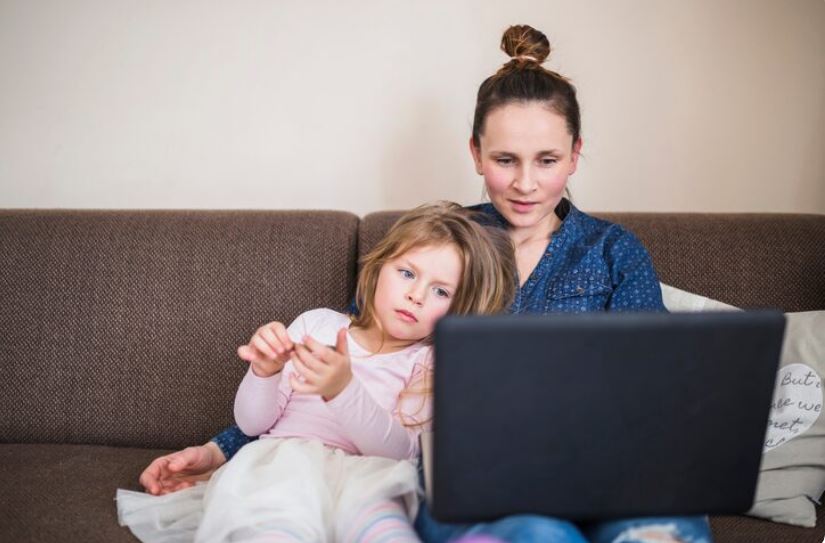
There’s a sense that parents who read that line feel two things at once: relief that it worked, and a quiet guilt that it took so long to try. That guilt is worth sitting with for a moment, because it tends to be part of the original problem. Most parents who rely heavily on screens for toddler management are not negligent.
They are tired, overwhelmed, and working with a tool that genuinely helps in the short term. A screen buys twenty minutes of peace. It absorbs a cranky child when nothing else will. The trouble is that toddlers adapt quickly, and what starts as an occasional distraction can quietly become the default condition for their attention.
Screen dependency in very young children is not a formal clinical diagnosis, but developmental specialists and parents alike recognize the pattern. A toddler who becomes unusually distressed when a device is removed — not just briefly upset, but inconsolable for extended stretches — is showing something more than ordinary preference. The brain at that age is in a period of rapid formation, and highly stimulating content tends to outcompete quieter activities that are, developmentally speaking, more valuable. Building with blocks simply cannot compete with animation, sound effects, and movement. The competition is not fair.
What happens to a child who spends four or five hours a day in front of a screen, as many toddlers now do, is cumulative and not always immediately visible. Sleep disruption is one of the more documented effects. The blue light emitted by screens interferes with melatonin production, which makes bedtime harder and rest shallower. Beyond that, extended screen time displaces face-to-face interaction, which is the primary mechanism through which toddlers learn social and emotional cues. A two-year-old watching a cartoon is not practicing reading expressions, negotiating with a peer, or figuring out how to manage frustration. Those are learned skills, and they require real situations to develop.
The missing remote strategy works partly because it sidesteps a direct confrontation. Toddlers who are told no often dig in. The no becomes a power struggle, and the screen becomes more desirable precisely because it is being withheld. When the remote simply cannot be found, there is no adversary, no battle. The child searches, loses interest, and moves on. The transition happens without the emotional charge that makes these situations so exhausting for everyone involved.
It is worth noting that other parents in that same Reddit thread mentioned variations on the same instinct — telling a child that the cartoons were having a nap, turning off the router and blaming it on the internet, simply having toys visible and accessible so redirection happened almost by accident. None of these are revolutionary parenting techniques. But collectively, they point to something real: the absence of a fight makes the absence of the screen much easier to accept.
It is still unclear whether the pattern holds across all temperaments and all levels of dependency. A child who has been screen-heavy for a year and a child who has had a few weeks of heavy usage are not in the same situation. And some toddlers will push harder and longer before finding their way to another activity.
But the underlying principle — that reducing screen time gradually and without confrontation tends to work better than sudden removal — is consistent with what behavioral specialists generally recommend. Structure helps too: screen-free zones in the home, a consistent routine that simply does not include devices before a certain point in the day, a timer that signals the end of screen time without a parent having to be the enforcer.
There is also the question of what parents are modelling. It is genuinely difficult to tell a child that screens need to go away while sitting with a phone in hand. Children watch everything. They absorb what adults do far more than what adults say, and a home where parents are themselves frequently pulled toward devices is a home where that pull will feel normal and expected to a growing child. The Reddit mother never mentioned her own screen habits, and maybe she did not need to. But most parenting specialists would note that any durable change in a child’s behavior usually requires at least some parallel shift in the household culture around it.
What stays with you from that story is not the trick itself. It is the mother’s surprise at what her son could do without the screen she thought he needed. He explored. He played. He found things to be interested in. It is possible that is the more important discovery — not that toddlers can be weaned from screens, but that they are more capable of entertaining themselves than the screen habit lets them demonstrate.
