

You can see it almost instantly if you walk into any pediatric waiting room these days. A young child, perhaps three or four years old, sitting engrossed in a tablet. Before they have mastered the proper grip of a pencil, tiny fingers are swiping. On its face, it’s not frightening. However, if you watch long enough, a pattern that is more difficult to ignore begins to show.
The way very young children interact with their environment appears to be changing. For years, pre-kindergarten teachers have been subtly raising concerns. Once a dependable pillar of the early childhood day, circle time has grown more challenging to maintain. Children appear almost physically uncomfortable during periods of stillness, fidget more, and disengage earlier. It seems like something has changed in the surroundings rather than the kids themselves.
The research is starting to catch up. Longer gaming sessions are directly associated with shorter attention spans in kids, including trouble focusing and increased impulsivity, according to a 2025 National Institutes of Health study. The cyclical nature that researchers found is more concerning: kids who already have attention issues are more drawn to gaming, which exacerbates the attention deficit. It’s not a straightforward cause-and-effect situation. It’s a loop.
| Factor | What the Research Shows | Why It Matters for Pre-K Children |
|---|---|---|
| Gaming & Attention Span | 2025 NIH study links longer gaming sessions directly to shorter attention spans and increased impulsivity | Pre-K brains are in peak neurological development — habits formed now are harder to reverse |
| The Attention Loop | Children with existing attention difficulties are more drawn to gaming, which worsens the deficit | Creates a self-reinforcing cycle that becomes harder to break over time |
| Dopamine Response | Gaming triggers dopamine release at levels comparable to some stimulant drugs (1998 study) | Developing brains forming impulse-control pathways are especially vulnerable to reward conditioning |
| Sustained Attention Decline | Children aged 7–12 show a 27% decrease in sustained attention during prolonged tasks | Younger, less self-regulated pre-K children likely face even steeper challenges |
| Fast-Paced Content Design | Games are engineered with flash rewards, instant feedback, and new stimuli every few seconds | Conditions the developing brain to expect constant stimulation — making stillness feel uncomfortable |
| Circle Time & Classroom Behavior | Pre-K teachers report increased fidgeting, earlier disengagement, and difficulty maintaining group attention | Behavioral shifts are visible in structured early childhood settings — not just at home |
| Screen Time Context | Supervised, slow-paced content differs significantly from unsupervised fast-paced gaming | Content quality, parental presence, and timing all shape the impact more than raw screen hours |
| Displacement of Slower Activities | Gaming hours replace pretend play, storytelling, outdoor activity, and unstructured boredom | These slower activities build sustained attention and creativity — skills games do not develop |
Online fast-paced games are specifically designed to maintain players’ attention through quick stimulation. colors that flash, instant rewards, and a fresh challenge every few seconds. It is distracting to an adult brain. It might be more akin to a conditioning process for a developing brain. There is remarkable neurological plasticity in the early years of life.
During those first five years, the brain is wiring itself at a rate that will never be surpassed, and it takes cues from the things in its surroundings that demand the most attention. For millions of kids today, that’s a screen running a game created by engineers who are more knowledgeable about dopamine loops than the majority of child psychologists.
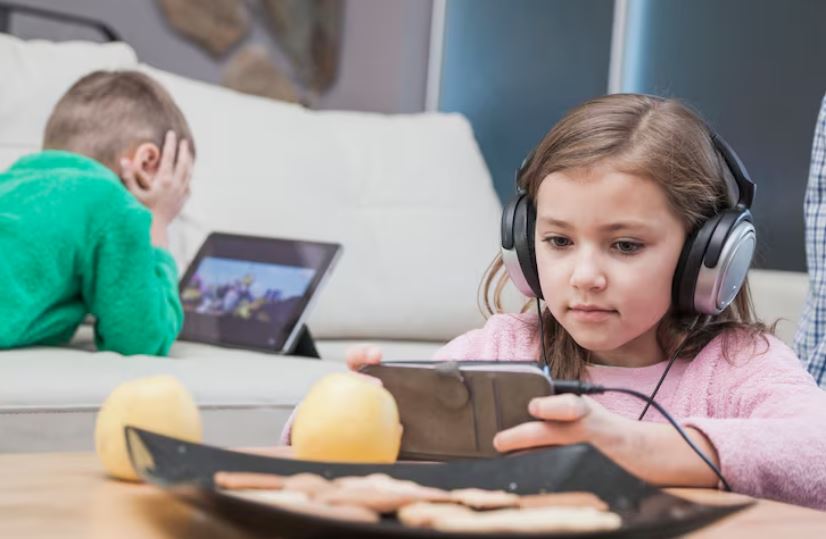
We should take a moment to consider that. Gaming releases dopamine at levels similar to those of some stimulant drugs, according to a 1998 study. That is noteworthy in adult brains. The implications of developing pre-K brains, which are still forming the very pathways that control impulse control, patience, and emotional regulation, should be given more serious public discussion than they currently receive.
All of this does not imply that every child who plays tablet games is on the verge of experiencing a cognitive crisis. That would be simplistic. The quality of the content is important. It matters if a parent is present. It is crucial to consider whether screen time is taking the place of outdoor play, conversation, or sleep. An hour of unsupervised fast-paced gaming before bed is very different from a twenty-minute puzzle game played with a parent close by. The distinction is lost in the larger cultural anxiety, which is problematic because it gives the impression that the discussion is all-or-nothing when it isn’t.
It is evident that the content’s pace is having an impact. Children between the ages of seven and twelve show a 27% decrease in sustained attention during prolonged tasks, according to research cited in Kids Discover. Younger, more impressionable, and far less capable of self-regulating their engagement are pre-K students. It makes sense to inquire about the status of four-year-olds who are recording comparable screen time if older kids are having difficulties.
Additionally, there is the issue of displacement. Building blocks, pretend play, listening to a story read aloud, and sitting with boredom long enough to create something are examples of slower, less immediately rewarding activities that develop a different type of mental muscle than the hours spent on games. In parenting culture, the word “boredom” is now practically frowned upon. However, the development of creativity and sustained attention occurs during unstructured time—that is, when a child must create their own stimulation. It’s not glamorous. On the internet, it doesn’t trend. However, it is important.
How long-lasting any of this is is still genuinely unknown. Good habits can be reestablished because the brain is still plastic well into adolescence. However, the first five years of life are especially sensitive. What is wired during those years is difficult to disconnect. This is the aspect of the discussion that is often overlooked in favor of assurances regarding moderation and screen time recommendations, and it most likely merits a slightly higher priority.
One of the more countercultural and subtly radical things a parent can do right now is to slow things down, even a little bit, even imperfectly.
