

A common scene can be seen in almost every home with a toddler. The kid is on the floor, half-playing and sometimes looking up. The parent is sitting on the couch with their eyes on a screen. They are scrolling, texting, watching, and aren’t really there. Traditionally, it has been thought that children should be kept away from screens. But more and more evidence points to the fact that the adult in that room should also be looked at closely.
When people talk about kids’ screen time, it’s easy to get caught up in the debate. Pediatricians make recommendations. Warnings are sent home by schools. Parents keep an eye on how their toddlers use tablets by setting timers and other controls. The parent’s phone, on the other hand, barely comes up in conversation. It’s worth looking into that difference.
In early childhood, language development doesn’t happen by itself. It happens through conversation, eye contact, back-and-forth, and a parent telling the child what’s going on in the world out loud. Research shows that one of the best ways to predict how well a child will learn language early on is to look at how often and how well adults interact with their children. When a screen, even a parent’s screen, gets in the way of that interaction, even if it’s only for a short time, the child loses something that can’t be replaced by an educational app.
Kids and adults are distracted in a different way when they use screens than when they read the newspaper or cook dinner. A buzzing phone makes you pay attention in a way that you can’t help but do. If they’re being honest, most parents have been there: they’re talking to their toddler, their eyes wander to a notification, and the connection between them and their child quietly breaks. At the moment, it doesn’t seem dangerous. When you add up the months and years, it’s not as clear that it is.
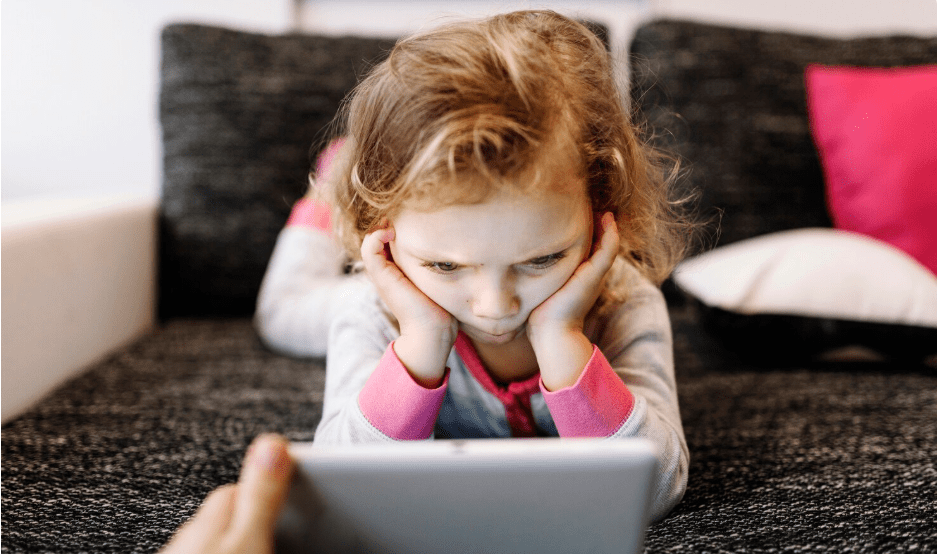
Another part of this that is easy to forget is the background TV. Ambient TV, like a show playing in another room or the news channel running in the background, has been shown to affect kids under five’s language use and executive functioning even when the child isn’t watching it. If that much noise and light from a screen can affect a child, then it’s not crazy to wonder what having a parent who is busy on their phone does to the texture of a child’s day.
Researchers who study screen time patterns are starting to say that future studies should look at the whole family’s screen time habits, not just the child’s. This is because parental screen time and children’s language outcomes may be linked in ways that the current frameworks haven’t fully captured. We need that change in framing for a long time. A toddler who watches two hours of TV a day while a parent watches four hours next to them is living in a certain type of screen environment that shapes their habits, expectations, and the mood of the home.
It’s not about who is to blame. As everyone knows, being a parent is really hard work, and a phone really does help you relax after a long day. But the rules that are used with toddlers—limit their screen time, be careful with what they watch, and be involved—still apply when an adult in the room picks up their own device. Kids learn from what they see. They take in a lot more of what they see than what they are told. Whether they mean to or not, parents who live distracted, screen-centered lives teach their kids something.
We shouldn’t just talk about how many hours a child spends on a tablet. There are other things that can be done as well. This is about how a child’s environment really feels—whether there are adults there who are really paying attention, whether there is a lot of conversation, and whether someone is there to answer the little questions and notice the little things. Screens have a way of slowly taking away that ability in both kids and adults.
