

Children have been the target of the long-running discussion concerning kids and screens. The amount of time they are using. what they’re observing. What’s happening to their sleep, focus, and social growth? In June 2026, Sweden’s Public Health Agency released new rules targeted at parents rather than children, which drastically changed the perspective. The message, which was conveyed without much empathy, was that adults in many houses are the ones who initiate the screen issue.
Helena Frielingsdorf, an agency researcher and psychiatrist, expressed it simply. Children are impacted by both what adults do and what they are told to do. It sounds like a straightforward observation. The underlying research is more difficult and unsettling. The health organization was hired by the Swedish government last October to look into whether children’s screen habits have quantifiable impacts. The results supported the long-held hypothesis of several researchers: they do. Children who grow up with heavy phone users are more likely to adopt such behaviors. Additionally, the effects extend beyond modeling; parental screen time lowers the quality of in-the-moment interactions and diminishes the responsiveness and attentiveness that children depend on throughout their development.
According to the new guidelines, parents should put their phones away when spending time with their kids, use electronics only when absolutely necessary or when they are using them with their kids, and set aside specific areas of the house as screen-free zones, including the dining room and bedrooms. These are hardly outrageous demands. However, they signify a significant change in Sweden’s perspective on the issue. Previous guidelines focused on setting limits for children. This advice recognizes that it might be challenging to set limits for kids when the adults in their immediate vicinity are clearly engrossed in the same gadgets.
In an interview with the public broadcaster SVT, Sweden’s minister of social affairs, Jakob Forssmed, stated that he believes people are unaware of how much their personal screen time impacts their kids. That approach, which emphasizes a real awareness gap rather than blame, seems appropriate for a discussion that could quickly turn defensive. The majority of parents do not check their phones at the dinner table because they don’t care about their kids. They are engaging in this behavior because the device’s pull is genuine and the habit is well-established, and no one made it apparent to them that their child was observing and learning from it.
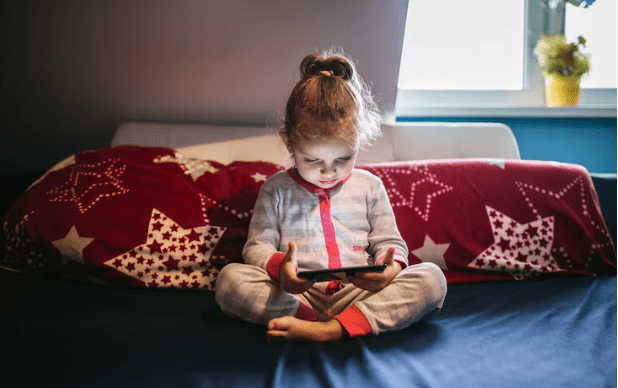
Compared to most other nations, Sweden has been more open to adopting institutional stances on screen time. In addition to publishing tiered guidelines for children’s screen time—none for children under two, one hour per day for those between the ages of two and five, and two hours for those between the ages of six and twelve—the nation has now incorporated a school smartphone ban into its Education Act, which will take effect for students up to Grade 9 at the beginning of the 2026–2027 autumn term. Compared to the incremental, fragmented solutions most governments have provided, the mix of measures—school bans, children’s restrictions, and now parental guidelines—reflects a more methodical approach to the problem.
