

There is nothing concerning about the Displacement Effect. It probably doesn’t get discussed as much as it ought to because of this. It doesn’t explain the direct effects of a screen on a child’s brain, such as radiation, toxins, or severe neurological damage. What it says is more straightforward and, in some respects, harder to refute: every hour a toddler spends in front of a screen is an hour they aren’t doing anything else. Additionally, the majority of a child’s actual development occurs in something else between the ages of one and five.
Toddlers need a conversation, which no screen can offer, in order to acquire language. Not satisfied. A dialogue, complete with pauses, answers, corrections, repetitions, and the kind of back-and-forth that occurs when a youngster says something that sounds like a word and a parent responds with the right word and a grin. Early childhood language development research has repeatedly shown that one of the best indicators of vocabulary growth and language fluency is the quantity of conversational turns a child encounters, not just the quantity of words they hear. No matter how instructive the information, a video cannot turn. It talks. The youngster pays attention. One thing is developed in that transaction, but not the other.
Physical development has a comparable gap but functions differently. A two-year-old’s developing brain and body are concurrently going through a complex process when they pull wooden blocks off a shelf and stack them: weight assessment, grip adjustment, balance, and the moment-to-moment recalibration that occurs when a tower falls and they have to figure out why. A distinct and considerably more limited set of physical abilities is required to swipe a glass screen. It exercises the index finger. The remainder of the body doesn’t. The development of fine motor skills, which are eventually necessary for threading things, holding a pencil, and using scissors, necessitates the kind of hand manipulation that real objects require but glass screens do not.
Parents frequently overlook the sensory aspect, yet it is important. Toddlers learn mostly through their senses. They pick things up, put them in their mouths, smell them, and sense the difference between warm and cold, soft and hard, and rough and smooth. At this developmental period, tactile and olfactory learning is the main way that young children develop their comprehension of how the physical world functions; it is not a lovely addition to screen-based learning. Sight and hearing are stimulated by a screen. Everything else is ignored. A child who spends several hours a day on a gadget is missing out on several hours of sensory development.
Instead than seeing boredom as a problem to be solved, it is important to consider it as a developmental idea. A toddler’s inherent resources for self-soothing, patience, and creative thinking start to develop the instant they encounter boredom—real, unresolved, nothing-to-do boredom—and must find their own way through it. Before it has an opportunity to do its job, a screen gets rid of boredom. There is always plenty to do, so the youngster never needs to look inward. Over time, that clause creates a void where creativity and tolerance were meant to grow.
The last component, sleep, functions more directly than the others. The generation of melatonin is suppressed by blue light from screens, which delays the onset of sleep and disrupts the deep sleep cycles that children require for brain consolidation and physical development. Sleep is not a passive recovery state in early childhood, and a child who winds down with screen time before bed will sleep later and less deeply than one who does not. The majority of the day’s brain processing and physical development actually occurs during this time.
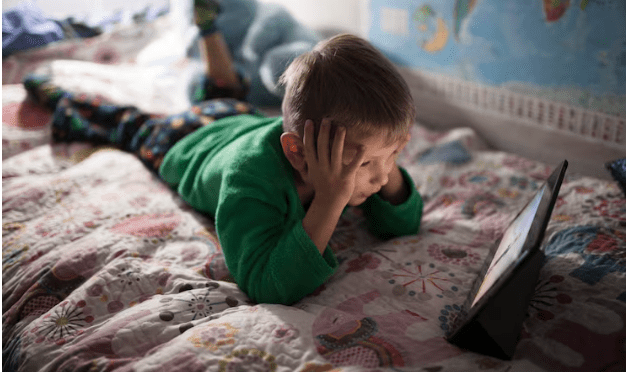
It is not necessary to treat every minute spent in front of a screen as a problem. However, a different and more honest way of thinking about the decisions being made is to recognize what the screen displaces rather than just what it offers.
