

A father is making a video chat to a grandmother while a fourteen-month-old is leaning against a cushion in a living room somewhere in the United Kingdom on a Tuesday morning. This qualifies as supervised shared screen activity under the government’s March 2026 criteria. It falls within one of the approved categories. Nothing that the policy forbids is being done by anyone in the room. However, an increasing amount of developmental research indicates that, from the infant’s point of view, what is going on in their brain during that encounter merits closer examination than what the policy now mandates.
The UK guidelines were a step in the right direction toward recognizing that screen time among young children is a serious and expanding problem that calls for public health recommendations. That is not insignificant. Prior to the creation of official guidelines, parents had to deal with this mostly on their own. Manufacturers, parenting apps, and clinicians operating from disparate research bases all gave them contradictory signals. At the very least, having clear guidelines documented is a good place to start. Critics argue that the government should not have said nothing, but rather that what it did say was insufficient and that the framework’s exceptions could compromise its intended protection.
The main worry of early childhood development researchers is that, whether or not an adult is present, there might not be a relevant safe threshold for under-twos’ frequent use of digital media. The iADDICT group and other academic organizations that have reviewed the data have come to the conclusion that intentional exposure to digital media provides negligible developmental benefits for infants in this age range, while the potential costs to language acquisition, attention formation, and caregiver-infant interaction are real and quantifiable. The supervised viewing exception is predicated on the idea that an adult’s presence alters the child’s neurological experiences. Contrary to what the policy suggests, there is less proof that this is true for infants under two.
The research on stress response is especially focused. An infant’s stress arousal system can be triggered in ways that interfere with behavioral regulation by fast-paced or chaotic visual content, which predominates in much of the algorithmically supplied digital world, including stuff theoretically intended for children. Increased heart rates, trouble falling asleep, and diminished ability to focus for extended periods of time after screen use are not hypothetical issues. Studies looking at babies who have even minimal exposure to high-stimulation digital information reveal them. This mechanism is not directly addressed by the policy’s differentiation between supervised and unsupervised viewing.
Particular attention has been paid to the video call exception. Practically speaking, that makes sense—a YouTube autoplay algorithm and a grandma on a screen are very different. However, the exception causes confusion in a setting where it is difficult to distinguish between a screen used as a distraction and a real video conversation. These two purposes are not clearly distinguished by modern technology. When a video call finishes, the youngster still sees the gadget. The application is still available. The algorithm is still in place and prepared to handle the changeover. Policies that allow specific categories of usage in settings where all permissible interactions are surrounded by an infrastructure of addictive design are facing a challenge that the guidelines fail to recognize.
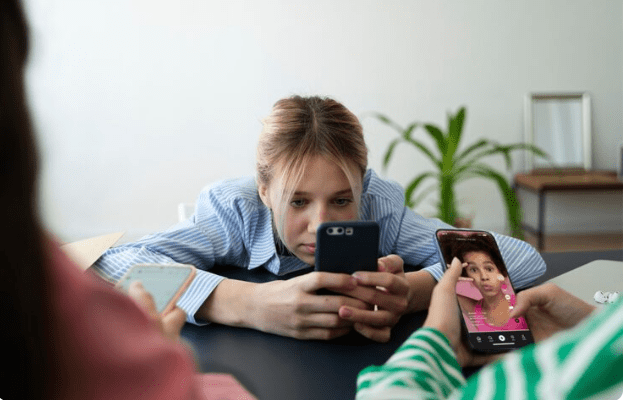
Reading the guidelines gives the impression that the government was balancing what is practically enforceable with what the science ideally supports, a decision that influences many public health recommendations. The strictest interpretation of the developmental studies suggests that children under the age of two should have no screen time. Additionally, it is extremely challenging to accomplish in a world where screens are a part of almost every shared physical space and where the devices that parents use to stay in touch with one other are also the ones that the regulations are attempting to restrict. There is actual tension. However, addressing it by incorporating exceptions into the guidelines without fully taking into consideration how those exceptions interact with the media ecosystem in which they function could result in a policy that is less protective of children and more comfortable for parents.
