

Researchers have spent decades observing how toddlers develop social skills in the observation rooms of Yale’s Child Study Center. By today’s standards, the equipment is really basic: one-way mirrors, careful notation, and video recording. How a youngster between the ages of one and three starts to understand other people, interpret faces, tone, and intention, and adjust their own reactions to the reactions they receive is the complex subject of their research. It’s the fundamental process of developing social skills. And the evidence constantly demonstrates that interaction, not observation, is how it occurs.
Content isn’t the main issue when it comes to screen usage and toddler social development. It has to do with what passive screen time replaces. A two-year-old is not doing nothing while they sit with a tablet; rather, they are digesting visual and audio information and frequently reacting with noticeable involvement. They’re not getting feedback, though. When a youngster cries, loses interest, grins, or softly touches the screen, the screen doesn’t react any differently. It goes on. The loop between action and reaction that teaches a child what their face, voice, and behavior do to other people is precisely the kind of interaction that screens structurally cannot deliver, and it is the foundation of social intelligence that grows over the first three years of life.
The most significant and unappreciated aspect of this difference is in nonverbal communication. Toddlers learn to understand emotional cues through innumerable hours of reciprocal interaction with caregivers and other kids. These cues include body posture, tone of voice, facial expressions, and physical proximity. Without reacting to the child’s actions, a screen shows faces in two dimensions. It doesn’t react to the child’s mood by changing its tone, mirroring their look, or widening its eyes when shocked. A real participant is necessary for the feedback loop that teaches nonverbal comprehension.
A similar but different process leads to the development of empathy. Researchers at the Yale Child Study Center emphasize that real empathy, or the ability to comprehend and react to another person’s emotional state, is acquired by seeing how one’s own behaviors affect actual people. When a toddler unintentionally bumps a sibling and witnesses them cry, then watches the parent console them, they are learning something that no screen can duplicate: that their actions affect other people’s emotions. Children can access emotionally charged fictional scenarios through passive viewing, but the lesson that can be learned from watching a cartoon character experience sadness differs significantly from the lesson that can be learned from making a real person experience sadness and seeing the consequences.
In clinical settings, the most obvious issue is emotional management. The kid loses the chance to learn how to regulate those states through internal resources or co-regulation with a caregiver when screens take over as the main means of calming an agitated or bored toddler, which happens easy because they work, instantly, and consistently. The medication relieves the discomfort. It does not, however, instruct the child on how to deal with distress. A toddler who is constantly comforted by a screen eventually grows up without the neurological pathways necessary to deal with discomfort since they have never had to.
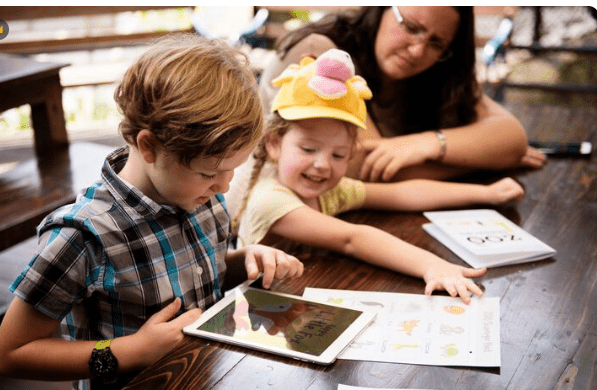
It is important to note that Yale’s guidelines do not rely on strict minute-counting as the main foundation for parents to utilize. Just as important as the amount of screen time is its context. A toddler viewing the same show alone on a tablet in a different room is not doing anything significantly different from a parent sitting with a toddler during a high-quality program, discussing the emotions of the characters and relating it to the child’s own experience. By adding the human element that screens cannot supply on their own, co-viewing with active adult interaction transforms a passive experience into something more engaged, which has a quantifiable protective effect on social cognition.
